
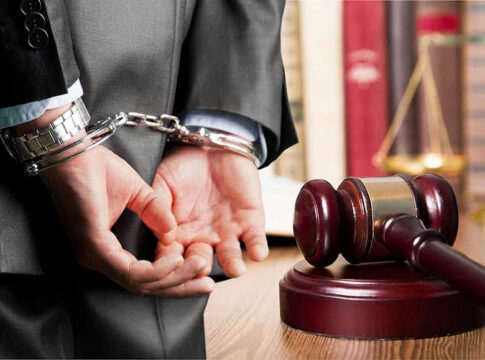
A billionaire Democratic donor who once courted California voters now finds himself accused of trying to silence the very witnesses the system relies on to tell the truth.
From Democratic Mega-Donor To Felony Defendant
Stephen Cloobeck did not rise to prominence as a street tough; he made his name in resort real estate, became a billionaire, then a high-dollar Democratic donor, and even briefly a candidate for California governor [1]. Now Los Angeles County prosecutors say this same man crossed a red line in the justice system’s rulebook, allegedly trying to interfere with witnesses tied to his fiancée’s criminal case [1][2]. That contrast, from kingmaker to accused court meddler, is why this story refuses to stay local.
Los Angeles County records, described in multiple reports, outline an arrest warrant filed April 28 that accuses Cloobeck of trying to prevent three male victims from testifying in the prosecution of his fiancée, an online model accused of targeting wealthy men through dating apps and then stealing luxury goods [1][2]. Prosecutors charged him with three felony counts of attempting to prevent or dissuade a witness or crime victim from attending a proceeding through force or threats, plus a related misdemeanor phone-contact charge in some accounts [2][3]. The allegation is not that he joined the thefts, but that he tried to derail the truth-finding stage.
How Witness Intimidation Becomes The Real Battle
The core allegation sounds simple: when the state prepared to put his fiancée on trial, Cloobeck allegedly tried to get in the way of witnesses the government needed. Reports say the charged conduct took place between December and February, a tight window that gives prosecutors a specific timeline to prove or lose [2]. One charging document reportedly singles out a named witness, Mike Farag, as a person Cloobeck is accused of pressuring not to testify or appear in court [2]. Naming a target like that signals that law enforcement believes it has concrete communications to point to, not just hearsay or rumor.
Witness tampering cases often become more about power than about the original crime. A person with money, status, or connections cannot easily stop a prosecutor from filing charges, but he can allegedly try to influence the evidence that reaches a jury. The Los Angeles County Sheriff’s Department says Cloobeck turned himself in at the West Hollywood station on the outstanding felony warrant and then secured release on $300,000 bail after booking, a detail that confirms this is not a speculative investigation but a live criminal case in the courts [1][4]. From a rule-of-law perspective, that matters: the system has formally decided his conduct deserves courtroom scrutiny, not just gossip-page coverage.
What We Do Not See In The Headlines
For all the noise, the public has not yet seen the underlying complaint or probable-cause affidavit. Reporters rely on summary descriptions from charging documents and sheriff’s statements rather than the actual messages, call logs, or recordings that supposedly show force or threats [1][2][3][4]. That gap means outsiders cannot yet judge whether the communications were truly coercive or more like heated, emotional pleas from a man watching his fiancée face prison. American conservative instincts about due process fit well here: allegations alone do not equal guilt, and vague descriptions of “threats” need hard evidence before reputations get permanently shredded.
Defense counsel has, so far, adopted a classic posture: blanket denial, minimal detail. Cloobeck’s attorney has publicly stated that the charges are false and that the defense looks forward to its day in court [1][3][4]. That response stakes out innocence but does not yet address specifics such as what was said to which witness, on which date, and in what tone. Until the court file becomes more accessible, both sides effectively ask the public to trust them. For anyone who cares about equal justice, that is a reason to slow down, not speed up, judgment.
Politics, Power, And The Temptation To Protect “Your Own”
Media coverage leans heavily into the angle that Cloobeck is not just wealthy, but a longtime Democratic donor, now facing charges in a blue stronghold [1]. Some commentary suggests that his arrest comes only after his political alliances shifted, hinting at score-settling. The available reporting, however, grounds the case in concrete law-enforcement steps: a warrant requested by sheriff’s investigators, charges filed by the local district attorney, and a surrender at a county station [1][2][4]. From a common-sense conservative lens, the healthier instinct is to test the evidence rather than spin a conspiracy based solely on timing.
•Mario Nawfal highlights billionaire Stephen Cloobeck’s arrest on felony witness tampering charges tied to his fiancée Adva Lavie’s alleged burglary scheme involving men met online; Cloobeck reportedly tried to dissuade victims from testifying.
•Cloobeck, a major Democratic… https://t.co/iS8JoA1QyP— B Wruble (@WrubleB) May 16, 2026
What this story really exposes is how fragile the justice system becomes when witnesses feel they might be leaned on, nudged, or outright threatened. When wealthy defendants or their allies appear to treat witnesses like negotiable inconveniences instead of citizens with a duty to tell the truth, ordinary people lose faith that courts deliver equal justice. At the same time, if prosecutors stretch “intimidation” to cover any angry message or awkward conversation, citizens risk criminal charges for emotional, not criminal, behavior. The Cloobeck case sits exactly on that fault line, where evidence, not ideology, should decide whether he is a man wrongly accused or an example of power finally checked.
Sources:
[1] Web – Ex-gubernatorial candidate with OnlyFans model fiancée …
[2] Web – Former California gubernatorial candidate Stephen …
[3] YouTube – Former California gubernatorial candidate Stephen Cloobeck …
[4] Web – Former CA gubernatorial candidate Stephen Cloobeck …