
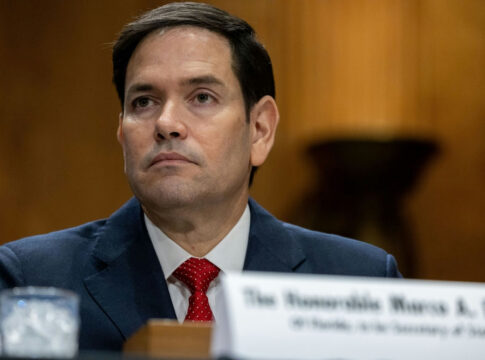
Trump’s NSPM‑7 directive has opened a new front against far‑left “enemies of civilization,” and now Marco Rubio and Stephen Miller are turning that power into a coordinated crackdown at home and abroad.
Story Snapshot
- Trump’s NSPM‑7 orders agencies to disrupt and defund far‑left political violence networks.
- Rubio’s State Department has named four violent far‑left groups as Foreign Terrorist Organizations.
- New visa rules and reward money target overseas funders and organizers of far‑left extremism.
- Civil liberties critics claim the crackdown risks punishing speech and peaceful protest as “terrorism.”
Trump’s Directive Targets Far‑Left Political Violence
President Donald Trump’s National Security Presidential Memorandum‑7, signed in September 2025, gives federal agencies a clear mission: dismantle networks tied to organized political violence, especially on the far left. The directive tells Joint Terrorism Task Forces to investigate and disrupt organizations involved in rioting, doxing, swatting, assaults, and other attacks that suppress lawful political activity. It also instructs the Treasury Department and Internal Revenue Service to cut off funding and tax breaks for any group that backs political violence.
Under NSPM‑7, law enforcement is ordered to “disrupt, identify, defund, debank, arrest, and prosecute” political terrorists, according to remarks highlighted at Rubio’s conference. This moves the focus from only foreign jihadists to domestic extremists, including anarchists and anti‑fascist networks that target conservatives and Christians. For many right‑leaning Americans who watched cities burn and police attacked in recent years, this is long‑awaited accountability, not overreach.
Rubio’s Global Push: FTO Labels, Visa Bans, and Financial Warfare
Secretary of State Marco Rubio has taken Trump’s directive global, rallying officials from more than 60 countries at the State Department to confront what he calls a “resurgence of far‑left political terrorism.” In November 2025, the State Department designated four violent far‑left groups in Europe as Foreign Terrorist Organizations, cutting them off from the United States financial system. Those labels make it a crime to provide material support and block access to banking and dollar transactions, hitting extremists where it hurts most — their wallets.
Rubio’s team also launched a ten‑million‑dollar Rewards for Justice program focused on far‑left terror financing. At the July 16, 2026 event, officials highlighted this campaign as a way to expose hidden funding pipelines and punish foreign backers. New visa restrictions announced the same day now bar entry to foreign nationals who fund, recruit, or enable far‑left terrorist networks. Treasury Secretary Scott Bessent signaled that his department is stepping up audits of nonprofits that may be used as fronts for radical left violence. Together, these moves aim to choke off the money, visas, and safe havens that far‑left organizers rely on.
Violent Incidents and Claims of a Transnational Network
In his speeches, Rubio cites a pattern of lethal far‑left attacks overseas, including a firebombing in Greece that killed a seventy‑two‑year‑old woman, a Berlin power station sabotage that led to the death of an eighty‑three‑year‑old, and a fatal beating of a twenty‑three‑year‑old in Lyon. He links these acts to extremist groups that share encrypted communications, safe houses, and funding, sometimes with help from hostile states such as Iran and Cuba. Stephen Miller adds that assaults on United States immigration officers have surged dramatically in recent years, warning of sniper attacks and organized ambushes.
These stories paint a picture of a transnational militant left that moves money, people, and tactics across borders while targeting conservative and Christian communities. However, many of these specific claims have not yet been backed by publicly available court records or police reports that tie the incidents directly to named groups. The same is true for dramatic statistics, like an alleged eight‑thousand‑percent jump in attacks on immigration officers. Supporters say intelligence may be classified, but critics argue that such sweeping allegations need clearer proof if they are to justify major new powers.
Critics Warn of Threats to Free Speech and Political Dissent
Left‑leaning media, legal scholars, and activist groups argue that NSPM‑7 and Rubio’s crackdown risk turning ordinary political opposition into “terrorism.” The Brennan Center and other analysts note that NSPM‑7 explicitly targets “all participants” in supposed conspiracies, including officers and employees of organizations and foundations that fund civil society groups. Another critical review says the order adopts a “pre‑crime” model, encouraging surveillance and disruption based on ideology and risk profiles rather than proven violent acts.
@courtdefenders 17-Jul-26 email
"Ahead of Trump’s national address tonight, Marco Rubio and Stephen Miller hosted an ominous press event on the “resurgence of political terrorism.”
Both Miller and Rubio delivered chilling remarks, vowing to use NSPM-7, a national security…— Sláinte – JohnLone Ranger (@1stSvelteCelt) July 17, 2026
Some legal experts warn that labeling views such as “anti‑capitalist” or “anti‑American” as signs of terrorism blurs the line between crime and protected speech. New legal documents reported by the Lemkin Institute claim Rubio’s teams have targeted students over op‑eds and protests about Palestinian rights, raising alarms about First Amendment violations. Major outlets like Reuters and Salon describe the far‑left focus as a “provincial obsession” and say many foreign partners are unimpressed and reluctant to join a broad ideological crusade. For conservatives, these critiques show the same pattern as past fights over Islamic terror: elites downplay the threat while warning more about the rights of radicals than the safety of their victims.
Balancing Security, Liberty, and Fair Targeting
Trump’s updated counterterrorism strategy lists “violent left‑wing extremists, including anarchists and anti‑fascists” as a top threat, alongside narco‑terrorists and legacy Islamist networks. Supporters argue this finally reflects facts on the ground, after years when left‑wing extremists could attack police stations or churches and still be treated as “protesters.” They see NSPM‑7, foreign terrorist labels, visa bans, and financial crackdowns as overdue tools to defend families, faith communities, and the rule of law from organized far‑left violence.
Still, conservatives who care deeply about the Constitution know any powerful tool can be misused. The key test for Trump’s second‑term crackdown will be whether agencies stay focused on actual violent plots and material support, or drift into punishing peaceful dissent. Rubio and Miller have opened an important front against radical left networks that many Americans recognize as a real danger. Now watchdogs, courts, and voters must hold Washington to a simple standard: stop terrorists, not citizens, and use new powers to protect liberty, not to crush it.
Sources:
military.com, cubacenter.org, reuters.com, youtube.com, npr.org, lemkininstitute.com, en.cibercuba.com, abcnews.com, ibtimes.co.uk, nbcnews.com, facebook.com, opb.org