
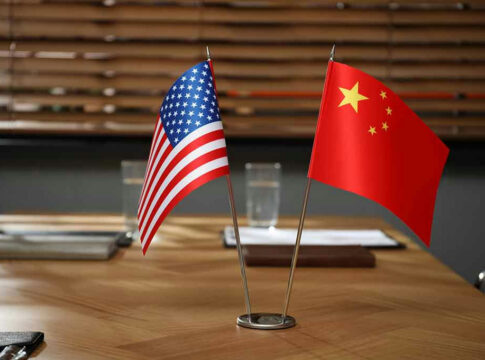
Trump touts a “G2 summit” breakthrough with Xi in Beijing, while conflicting signals on Taiwan and missing paperwork raise hard questions conservatives must press Washington to answer.
Leaders Signal Calm and “Consensus,” But No Binding Deal Emerges
China’s Foreign Ministry said Trump and Xi “reached new consensus” and agreed to handle each other’s concerns and strengthen communication on global issues, presenting an image of stability from Beijing’s side of the ledger [1]. Trump praised the talks and framed the meeting as unusually consequential for both nations. However, neither side released a jointly signed text or implementation document. The absence of a verifiable agreement means outcomes hinge on follow‑through rather than enforceable commitments at this stage [1].
Fox News’ live coverage reported that the White House called it a “good meeting,” highlighting prospects for expanded economic cooperation, greater market access for American firms, and increased Chinese purchases of U.S. agriculture [3]. Trump also said China would order 200 Boeing jets, a claim that, while potentially significant for American manufacturing and jobs, lacked corroboration from company filings or Chinese procurement records in the available reporting [3]. For conservatives focused on results, documentation will matter more than broad assurances.
Taiwan Remains the Flashpoint That Could Reframe Everything
Reports indicated Xi warned Trump that United States support for Taiwan could lead to conflict, a stark reminder that Beijing’s first red line remains fully intact despite cordial optics [4]. That message contrasts with Washington’s economic‑first framing and suggests strategic differences persisted beneath the “consensus” language [1][4]. Without convergence on Taiwan policy, any commercial momentum is exposed to rapid reversal. Conservatives should expect deterrence and clarity to guide policy—avoiding concessions that embolden aggression or undermine American allies.
Analysts have argued China often enjoys leverage in these encounters, given its state‑directed economy and focus on long‑term positioning in trade, technology, and regional security [2]. While pageantry and personal rapport can cool temperatures temporarily, they do not resolve core disputes. This is why verifying concrete steps—agricultural purchases booked, market barriers lowered, intellectual property protected—will be the yardstick. Rhetorical calm is welcome; measurable commitments are essential for American workers and national security [1][2].
Trade, Agriculture, and Energy: What Conservatives Should Watch Next
The administration’s readout emphasized market access for U.S. businesses and more Chinese buying of American farm goods, both priorities for communities hit by past offshoring and unfair practices [3]. If Beijing translates words into orders, that could help factory towns and farms. Still, conservatives will remember earlier episodes where upbeat statements faded without enforcement. Tracking purchase orders, tariff adjustments, non‑tariff barrier removals, and export approvals will reveal whether this summit delivers jobs rather than headlines [3].
Beijing Summit Day 2: Trump Says He Discussed Iran War With Xi And Both Want ‘Straits Open’ (Live Updates)https://t.co/L8ncHo2CS4 pic.twitter.com/oL62RKbGId
— Forbes (@Forbes) May 15, 2026
On energy and Iran, reporting described hopes that China would help keep vital sea lanes open and pressure Tehran, but did not show concrete Chinese commitments [3]. Conservatives value peace through strength: clear, reciprocal steps that protect navigation, deter adversaries, and avoid open‑ended entanglements. Until Beijing demonstrates action—whether on the Strait of Hormuz, sanctions compliance, or technology transfers to hostile regimes—claims of strategic alignment should be treated as provisional rather than proven [3].
Accountability Checklist: From “G2” Rhetoric to Real‑World Results
Trump extended an invitation for Xi to visit Washington, indicating the White House intends to keep high‑level channels open to manage risks and test areas for cooperation [4]. Continued talks can be useful, but conservatives should demand transparency: release precise readouts, verify commercial deals, and outline enforcement. If China truly agreed to large jet purchases or new farm imports, corresponding corporate disclosures and trade data will show it. If not, Congress and the public deserve straight answers before celebrating a breakthrough [3][4].
Sources:
[1] Web – Trump and Xi reached new consensus in Beijing summit, China’s foreign …
[2] Web – At the Trump-Xi Summit, China Will Have the Upper Hand
[3] Web – Trump, Xi make remarks at state banquet on day two of …
[4] Web – Xi Warns Trump of Potential “Conflict” over Taiwan in …