
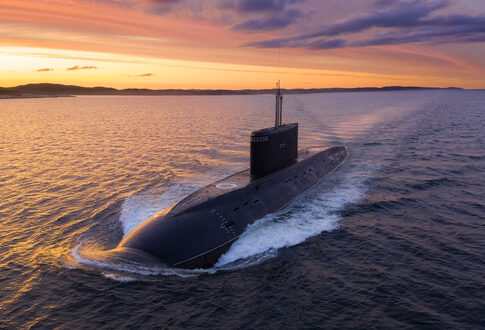
A British submarine force once feared by the Soviets is now largely tied to the pier, raising hard questions about what happens when Western elites neglect real defense while preaching globalism and green dogma.
Story Snapshot
- Open-source analysis indicates only one Astute-class attack submarine has recently been fully combat ready, with others stuck in maintenance or low readiness.
- British media and experts warn of an “Astute gap,” where world-class nuclear submarines spend years in dock instead of deterring Russia or China.
- This crisis reflects years of underinvestment, industrial overstretch, and political choices prioritizing image over hard power.
- For American conservatives, the Royal Navy’s struggles are a cautionary tale about what happens when a great nation lets its defenses hollow out.
How Britain’s Frontline Attack Submarines Ended Up Stuck in Port
Defense analysts now describe the Royal Navy’s Astute-class nuclear attack submarine fleet as a force with impressive technology but dangerously limited availability, with at times only one boat fully ready for deployment.[2][3] One detailed assessment in early 2026 reported that a single Astute-class submarine, HMS Anson, was the only fully operational attack submarine, while the rest were in maintenance, not yet fully operational, or otherwise unavailable for combat missions.[2] That narrow margin leaves Britain exposed if a crisis erupts suddenly.
Video analysis of what experts call the “Astute gap” explains that Britain fields five Astute-class boats in service—HMS Astute, Ambush, Artful, Audacious, and Anson—but that “at times, only one or two” nuclear submarines have been ready for deployment.[3][6] Across the broader nuclear fleet, including ballistic missile submarines, open-source estimates suggest that at certain points only two boats were available for immediate operations.[3] For a nation that once guarded the North Atlantic sea lanes, that level of readiness is seen as historically low and strategically risky.
Maintenance Gridlock, Industrial Overstretch, and Political Choices
The Royal United Services Institute, a respected British defense think tank, notes that the United Kingdom now operates just five Astute-class attack submarines, less than half the number of attack boats the Royal Navy had at the end of the Cold War. That smaller fleet means every extended repair, refit, or training period immediately shows up as a gap in frontline capability. Analysts describe a mix of long maintenance intervals for nuclear boats, industrial bottlenecks, and limited skilled labor as key reasons why submarines are stuck pier-side instead of on patrol.[3]
The “Astute gap” video points to construction shortcuts in early boats, corrosion issues, and aging facilities as factors that now keep the class tied up in dock for years at a time.[3] BAE Systems, which builds the Astute class, highlights the submarines’ formidable design—nuclear power, long endurance, Tomahawk cruise missiles, and advanced torpedoes—but these strengths only matter if the boats are actually at sea.[4][6] When the single fully ready Astute-class submarine was sent to Australia for maintenance and AUKUS-related cooperation, analysts warned that Britain had effectively removed its only immediately deployable attack submarine from home waters.[1][2]
Government Assurances Versus On-the-Water Reality
British government publications still describe the Astute class as the Royal Navy’s current nuclear-powered attack submarines, listing multiple boats in service and emphasizing their role in defending the United Kingdom and supporting NATO commitments.[6] Official material stresses that Astute-class submarines represent the cutting edge of British undersea power, designed for global reach and high-end warfare.[4][6] However, these descriptions focus on theoretical capability, not on how many hulls can actually sail on short notice in a real-world crisis.
Independent reporting and expert commentary draw a sharper picture, warning that availability—not design—is the central problem.[2][3] When only one Astute-class submarine is assessed as fully ready, Britain’s practical ability to launch rapid cruise missile strikes or quietly track adversary submarines shrinks to almost nothing.[2][3] Observers argue that this pattern reflects a broader Western habit: celebrating ambitious alliances and climate agendas while assuming hard military capability will somehow take care of itself, even as fleets age and shipyards struggle.[3]
Why This British Crisis Should Matter to American Conservatives
For American readers who care about strong borders, a serious military, and real deterrence, the Royal Navy’s situation offers a stark warning about the costs of complacency. British experts stress that a small fleet, long nuclear maintenance cycles, and poor transparency combine to turn temporary repair backlogs into what looks like a full-blown readiness crisis. The same forces could easily hollow out American sea power if Washington prioritizes bureaucracy, social engineering, and green mandates over shipbuilding, maintenance, and skilled workers.
As Britain struggles to keep even a handful of elite submarines at sea, adversaries like Russia and China are not slowing down.[3] Defense analysts caution that when Western governments chase virtue-signaling policies instead of ensuring basic military readiness, the free world’s undersea advantage can disappear in a single budget cycle. For conservatives who support President Trump’s push to rebuild American strength, the Astute-class “gap” is a real-time case study in what happens when a great navy is left to atrophy under globalist, spend-but-dont-build leadership.
Sources:
[1] Web – Entire British Fleet of Attack Submarines Is Docked and Incapable of …
[2] Web – The Royal Navy Has Only 1 Combat-Ready Astute-Class Nuclear …
[3] Web – Why can’t Royal Navy submarines operate under polar ice?
[4] YouTube – The Astute Gap: Why Britain’s Best Submarines Are Stuck in Port
[6] Web – HMS Anson returns to Faslane – no Royal Navy attack submarines …