
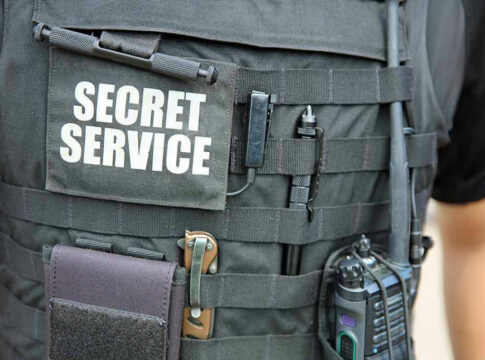
A Department of Homeland Security review says a Secret Service member was Googling the shooter’s rooftop as shots rang out, raising sharp questions about missed warnings and basic readiness.
Story Highlights
- A Department of Homeland Security review says a Secret Service member searched the shooter’s rooftop online during the attack.
- Newly released Federal Bureau of Investigation (FBI) pages reference a “gray remote device” found in the attacker’s pocket.
- Local police flagged a suspicious man and relayed alerts more than 10 minutes before the shots.
- The FBI briefed Trump that agents saw the rooftop suspect only minutes before the gunfire.
DHS review cites Google search by agent as gunfire began
A Department of Homeland Security review into the Butler, Pennsylvania attack reports a Secret Service member searched online for the precise rooftop location as gunfire began. The review underscores a breakdown in situational awareness and field coordination at the rally site. The timing matters because officers had already reported a suspicious man and unusual activity. The picture is of a protective detail stuck in catch-up mode when seconds counted, instead of locking down high ground before the first shot.
Judicial Watch forced the release of 48 heavily redacted FBI pages that add new puzzle pieces. The pages include a reference to a “gray remote device” with an antenna recovered from the attacker’s pocket by a tactical officer, a detail the FBI has not publicly explained with a full forensic report. The watchdog group also notes that only a handful of pages have been released out of an estimated 75,000, leaving major gaps that keep key questions open for Congress and the public.
Police warnings and timeline gaps before the shooting
The House task force’s final report documents that local officers observed the suspect and flagged his behavior hours before the rally, including a 5:00 p.m. sighting by three different officers. The report also says a stream of calls and messages about the man’s movements reached the Secret Service between 5:38 and 5:51 p.m., more than 10 minutes before the shooting began. Those warnings should have triggered a hard perimeter, roof checks, and a halt to the event, but the threat window closed before those steps took hold.
Federal briefers later told President Trump that law enforcement first saw a person on the roof roughly three minutes before shots and recognized a rifle about 30 seconds before the gunfire, compressing the response window to seconds. That account suggests officers on site lacked a clear picture until the last moments. Placed next to the earlier local warnings, the total record points to a communication breakdown, unclear command roles, or both, during the final minutes before the attack.
Competing claims, corrections, and what holds up
Separate claims that a county deputy exchanged emails with the attacker collapsed after further review. Judicial Watch corrected its statement and removed the claim when the FBI said the redacted emails were school-related messages with instructors, not law enforcement. The county sheriff also rejected the deputy-email claim as false. This correction narrows the dispute and shows how redactions can feed bad inferences and internet rumor mills if agencies do not release timely, clear records.
Other core facts remain intact and deserve answers. The record still shows officers called out a suspicious man well before the shots. The Department of Homeland Security review still logs a real-time Google search by a Secret Service member, not a rumor. The FBI has not provided a public, unredacted forensic analysis of the “gray remote device,” even as that detail appears in the released pages. Those points are concrete. They point to process failures and missing transparency that Congress can remedy.
What accountability and reform should look like now
Congress should demand the unredacted forensic report on the gray device and a clear chain-of-command timeline from the first local warning to the final shots. Lawmakers should request remaining investigative files at scale, with narrow, justified redactions, not a drip of dozens from a universe of tens of thousands. The House can also standardize rally site surveys so roofs, ladders, and line-of-sight angles get cleared early, and any rooftop movement auto-triggers a stop to program flow.
[1/7] 🗂️ The FBI has 75,000+ records on Thomas Crooks. They are releasing them at a few dozen pages per MONTH under a Judicial Watch lawsuit. Why is a "lone gunman" file the size of a Rockefeller archive — and why would anyone hide it this slowly? 🧵
— The Mel K Show (@MelKShow) June 27, 2026
For the Secret Service, simple steps save lives. Field teams must pre-clear all elevated vantage points and secure ladders. Unified radio channels should bridge local police and federal agents from the first suspicious-person call. Command posts should run a shared threat board with timestamps and required actions. If a Department of Homeland Security review shows an agent turning to Google during live fire, then training, checklists, and communications discipline need urgent fixes before the next rally.
Sources:
judicialwatch.org, hindustantimes.com, reddit.com, newsweek.com