
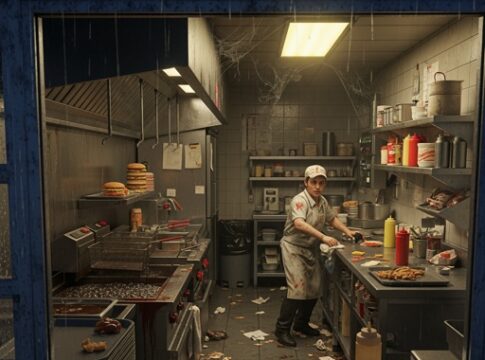
A major Carl’s Jr. franchisee just joined the growing parade of fast-food operators filing for bankruptcy protection, placing 65 California restaurants and over a thousand jobs in jeopardy while the parent company insists everything else is just fine.
The Latest Franchise Casualty in California
Friendly Franchisees Corporation submitted voluntary Chapter 11 petitions through multiple subsidiaries including Senior Classic Leasing, DFG Restaurants, Second Star Holdings, Sun Gir Inc., and Third Star Investments in the U.S. Bankruptcy Court for the Central District of California. The April 2 filing immediately threw the fate of all 65 Carl’s Jr. locations into uncertainty. Carl’s Jr. issued a statement emphasizing that the situation remains specific to this individual franchisee’s financial and business circumstances, with no impact expected on other locations. The brand committed to supporting profitable, sustainable growth for its remaining franchisees, but the reassurance rings hollow for employees wondering if their paychecks will clear next month.
The Burger Bankruptcy Epidemic Nobody Talks About
This isn’t an isolated incident but rather the latest chapter in a troubling pattern sweeping through fast-food franchising. Carrols Restaurant Group, once Burger King’s largest franchisee, closed dozens of stores in 2024 before parent company RBI acquired it for $1 billion and pumped in $500 million for reimaging. Just last year, Consolidated Burger Holdings filed Chapter 11 seeking to sell 57 Burger King locations across Florida and Georgia while rejecting leases on money-losing sites. Before that, Wendy’s Starboard Group and Burger King Premier Kings both filed in November 2023. The trend reveals an uncomfortable truth about franchise economics that corporate PR teams prefer to gloss over with optimistic growth projections.
What Chapter 11 Really Means for These 65 Locations
Chapter 11 bankruptcy provides breathing room for reorganization, but it’s rarely a fairy tale ending for all locations involved. The process allows operators to reject unprofitable leases, sell viable locations as a going concern, or liquidate entirely depending on what the numbers dictate. Bankruptcy firms like Greenspoon Marder emphasize that Chapter 11 enables swift sales and strategic lease rejections to restore profitability, but that clinical language masks the reality facing workers. When Carrols went through this process, dozens of locations vanished permanently. The bankruptcy court judge overseeing this case holds extraordinary power to determine which communities keep their local Carl’s Jr. and which lose both jobs and convenient meal options.
The Economics Behind the Collapse
Carl’s Jr. restaurants typically generate lower revenue per unit than McDonald’s or Burger King outlets, creating thinner profit margins that leave less cushion when costs spike. California’s notoriously high labor costs, expensive real estate, and competitive fast-food landscape compound the challenge. Friendly Franchisees Corporation operates in one of the nation’s most demanding business environments, where regulatory burdens and overhead expenses can devour margins faster than customers devour Famous Stars. The franchisee model depends on scale and efficiency, but when debt service, lease obligations, and operational costs exceed revenue at enough locations, even a 65-unit operation faces existential crisis. The parent brand enjoys franchise fees and royalties while operators absorb the financial risk, a dynamic that becomes painfully evident when bankruptcy filings arrive.
What History Tells Us About Closure Odds
Precedent strongly suggests that at least some of these 65 locations won’t survive the reorganization process. Carrols closed dozens before its acquisition. Consolidated Burger Holdings explicitly sought to reject leases on underperforming sites when it filed. Chapter 11 exists partly to facilitate exactly this kind of portfolio optimization, allowing operators to shed money-losing locations while preserving viable ones. The question isn’t whether closures will occur but how many, and which communities will lose access to these restaurants and the jobs they provide. Over a thousand employees now wait to learn their fate, with hourly workers facing the greatest vulnerability since they typically lack severance packages or employment contracts that might cushion the blow.
The Bigger Picture Nobody Wants to Acknowledge
These repeated franchise bankruptcies expose uncomfortable realities about modern fast-food economics that challenge the industry’s cheerful growth narratives. When multiple major operators across different brands file for bankruptcy protection within months of each other, it signals systemic problems rather than isolated mismanagement. Rising labor costs, increasing competition, delivery app fees, and changing consumer preferences all squeeze operators who invested heavily based on rosier projections. Parent companies benefit from refranchising bankrupt operations to better-capitalized owners, essentially using Chapter 11 as a market correction mechanism. The approach might optimize brand portfolios, but it treats employees and communities as collateral damage in financial engineering exercises that prioritize corporate flexibility over worker stability.
Sources:
Chapter 11 Bankruptcy Filing of Consolidated Burger Holdings LLC: A Strategic Move for Restructuring
McDonald’s rival franchisee files Chapter 11, 65 restaurants at risk
Fast-Food Chain Operator With 65 Locations Files for Bankruptcy