
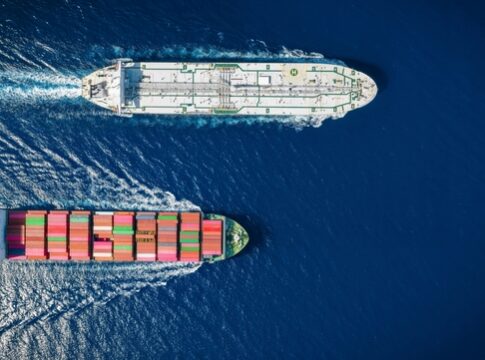
Two giant Iranian oil tankers just sailed out of a U.S. blockade zone in the Strait of Hormuz after President Trump ordered the Navy to stand down as part of a high‑stakes push for a peace deal and cheaper energy.
Story Snapshot
- At least two Iranian supertankers carrying 3.8 million barrels of crude crossed the U.S. blockade line in Hormuz.
- Tracking data shows this is Iran’s first crude export in two months, as blockade enforcement eases.[6]
- President Trump authorized a “toll free opening of the Strait of Hormuz” and removal of the naval blockade.[1]
- A framework deal reportedly grants Iran immediate oil sanctions waivers, while key nuclear and cash issues stay unresolved.[6]
Iranian Supertankers Test A Softening Blockade
Maritime tracking firms report that at least two National Iranian Tanker Company supertankers, the Diona and Hero 2, have exited the United States Navy blockade perimeter in the Strait of Hormuz carrying a combined 3.8 million barrels of Iranian crude oil.[6] Satellite imagery backs up the automatic tracking data, which shows the ships crossing the line that marked the enforcement zone. A tracking service later said a third Iranian tanker with about one million barrels also left the restricted area.[5]
News outlets say this marks Iran’s first crude oil exports in about two months, after the blockade and war had choked off sales.[6] The tankers moved just days before United States and Iranian negotiators are set to meet at the Burgenstock resort in Switzerland to work on a final peace deal.[8] Markets responded fast as traders read the tanker moves as proof that oil flows from the Gulf could pick up again if the talks hold and the blockade stays down.[8]
Trump Orders Strait Open As Part Of Peace Framework
European coverage notes that President Donald Trump declared on Truth Social that “the Deal with the Islamic Republic of Iran is now complete” and that he authorized the “toll free opening of the Strait of Hormuz” plus the “immediate removal of the United States Naval blockade.”[1] This order signaled to the Navy and the world that shipping lanes, which carry a large share of global oil, should reopen without new transit fees charged by Iran or others.
A senior United States official told reporters that a framework memorandum was electronically signed by President Trump, Vice President JD Vance, and Iranian negotiators, including Majid Takht‑Ravanchi and Mohammad Bagher Ghalibaf.[6] That same official said the deal includes waivers on sanctions tied to Iranian oil sales, set to take effect as soon as the agreement is formally signed. That means United States policy now allows buyers, banks, and shippers to handle Iranian oil without facing automatic Treasury sanctions.
Sanctions Relief Starts, But Nuclear Issues And Cash Remain Murky
The Wall Street Journal, cited by several outlets, reports that the United States will allow Iran to restart oil and fuel exports under the framework, with waivers covering energy sales plus related banking, transportation, and insurance services.[6] For families facing high fuel bills at home, this kind of relief on global supply can help ease prices, even if it comes through a deal with a hostile regime. But this also gives Tehran new cash streams that conservatives worry could feed its military and proxy groups.
Reports also say the full text of the memorandum has not been released to the public or even to some Group of Seven allies, who are frustrated they have not seen the detailed terms.[6] Key issues such as strict limits on Iran’s nuclear program, timelines to dispose of enriched uranium, and how much of Iran’s roughly one hundred billion dollars in frozen assets will really be unlocked are still unsettled or only partly addressed.[13] Analysts warn that this opacity could create rifts with Europe and Israel and make it harder to enforce tough conditions later.
Peace Talks In Switzerland And Risks For U.S. Interests
Iranian Foreign Minister Abbas Araghchi has said that talks on a final settlement will start Friday at Burgenstock in Switzerland, building on the current ceasefire and framework.[7] The broader understanding, mediated by Pakistan and Qatar, is described as a sixty‑day extension of a ceasefire window meant to allow negotiators to iron out nuclear, sanctions, and asset issues.[13] During this time, the United States has formally lifted its naval blockade, and the Strait is supposed to be cleared of mines and reopened to global shipping.[13]
Iranian tankers exit US blockade zone ahead of peace talks https://t.co/ogpFPFHch4
— Syeda Shabana Ashraf (@SyedaShabanaAsh) June 17, 2026
Conservative experts see both opportunity and danger. On one hand, easing the blockade and restoring flows through Hormuz can lower energy costs and reduce the odds of a wider regional war that could drag in American troops for years.[13] On the other hand, Iran’s long record of pushing for regional dominance and misleading inspectors, combined with reports of Israeli strikes on Iran’s allies and Tehran’s threats toward Gulf ports, suggests this “peace window” could be fragile and easily abused by the regime.[7]
Sources:
[1] Web – Iranian tankers exit US blockade zone ahead of peace talks
[5] Web – Iranian oil tankers leave Hormuz blockade zone as US-Iran peace talks …
[6] Web – Iranian tankers exit US blockade zone ahead of talks
[7] Web – Iranian oil tankers pass US blockade ahead of peace deal signing
[8] YouTube – US BLOCKADE CRACKED? Iranian Oil Tankers Cross Strait; IRGC Threatens …
[13] Web – In Turn From Iran Talks to War, U.S. Casts Doubt on Diplomacy