
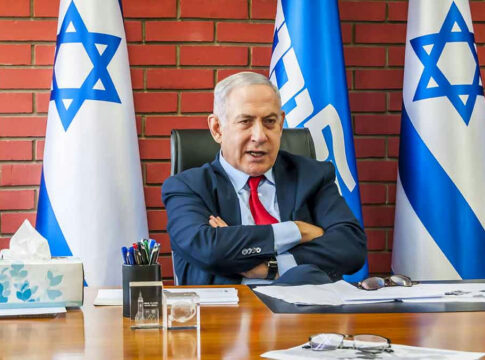
Israel’s prime minister has warned that any fresh Iranian attack will be met with a “decisive blow,” raising the stakes in a war that already threatens global security and energy supplies.
Story Snapshot
- Netanyahu vowed a “decisive blow” if Iran attacks again and ordered Israeli forces to escalate operations.
- His threat follows major joint US–Israeli strikes on Iran’s nuclear and missile sites and a brutal Twelve-Day War.
- Iran has already answered past Israeli moves with missile and drone barrages across the region, hitting Israel and US interests.
- Analysts warn this tit-for-tat cycle could grow into a wider regional war that drives up oil prices and tests US resolve.
Netanyahu’s New Warning: ‘Decisive Blow’ if Iran Strikes Again
Israeli Prime Minister Benjamin Netanyahu has publicly vowed that Israel will deliver a “decisive blow” against Iran if Tehran launches new attacks on Israeli territory or citizens. On Sunday, he said he had already given orders for Israeli forces to keep escalating their offensive, signaling that Israel’s current campaign is not slowing down. In another recent speech to Israel’s parliament, Netanyahu warned that any attempt by Iran to harm Israel “will be met with a decisive response,” calling such a move “one mistake too many.” These statements fit a clear pattern in which he links Israel’s survival to hard military red lines and promises overwhelming retaliation when those lines are crossed.
Netanyahu’s latest vow does not come in a vacuum. It follows a devastating missile and drone assault on Tel Aviv that he called “an existential threat,” after which he promised swift and overwhelming retaliation and said Israeli fighter jets would soon appear over Tehran to hit “every site and every target” tied to Iran’s rulers. Earlier, he told Israelis that their country is in “one of the largest military operations in history,” aimed at stopping Iran’s nuclear and ballistic missile threats before they can be used against Israel. In past speeches, he has pledged that as long as he is prime minister, Iran will never obtain a nuclear weapon, framing the confrontation as a fight for basic survival rather than a limited border clash.
From Preemptive Strikes to Twelve-Day War: How the Conflict Escalated
Over the last two years, Israel’s fight with Iran has grown from shadow operations and covert sabotage into open state-on-state warfare, including large air campaigns and direct hits on nuclear facilities. In June 2025, Israel launched major strikes on Iranian nuclear sites and scientists, saying the targets were part of a fast-moving plan to build nuclear weapons. Netanyahu later told the public that “attacks on Iran are nothing compared with what is coming,” warning that the campaign would escalate further if needed to stop Tehran’s nuclear work. In early 2026, the Israeli security cabinet approved more strikes on Iran after talks between Netanyahu and President Donald Trump, setting the stage for what became known as the Twelve-Day War.
During that war, Israel started **Operation Rising Lion**, hitting Iran’s main enrichment facility at Natanz, other nuclear weapon sites, key nuclear scientists, and parts of its ballistic missile program. Netanyahu described Iran’s nuclear efforts as “a clear and present danger to Israel’s very survival” and said the operation would run “for as many days as it takes” to remove the threat. At the war’s end, he claimed a “historic victory,” telling Israelis that their forces had removed “two immediate existential dangers”: the risk of nuclear destruction and the danger from some 20,000 ballistic missiles pointed at Israel. He warned, however, that if Iran tried to rebuild those programs, Israel would act again “with the same resolve and strength,” making clear that the fight is far from over.
Iran’s Retaliation and the Risk of Wider Regional War
Iran has not stood still after Israeli and US strikes. Following earlier Israeli attacks, Tehran answered with waves of missiles and drones aimed not just at Israel, but also at United States forces and regional targets. Iranian strikes have hit US military facilities in Bahrain, Jordan, Kuwait, Qatar, and the United Arab Emirates, along with airports and oil infrastructure in Gulf states. These barrages have also targeted Israel directly and threatened energy shipping routes, including the narrow straits that carry about one-fifth of the world’s oil. This pattern shows that when Israel delivers the kind of “decisive blows” Netanyahu promises, Iran often chooses retaliation instead of backing down, pulling more countries into the line of fire.
#NSTworld Netanyahu: Israel will deliver 'decisive blow' if Iran attackshttps://t.co/I3oKv3RyDp
— New Straits Times (@NST_Online) July 14, 2026
The United States has now joined Israel openly in this fight, with two aircraft carrier groups and advanced aircraft taking part in a broad campaign against Iranian cities and military sites. Experts say the joint moves aim not only to kill senior Iranian officials and damage strategic infrastructure, but also to create “conditions for regime change” in Tehran. That strategy brings serious risks for American families and workers. Oil shipping through key chokepoints has nearly stopped after attacks on vessels, threatening higher energy prices and tougher times at home if the crisis drags on. For conservative Americans who value strong borders, affordable energy, and a military focused on real threats, the stakes are clear: if Iran keeps lashing out and the war grows, the pressure will fall on US troops, US wallets, and US allies.
Politics, Deterrence, and What Comes Next
Netanyahu’s vow of a “decisive blow” also reflects political pressure inside Israel, where he has long built his image around hard-line security policies and promises to stop Iran at any cost. Analysts note that past threats of crushing strikes, including in April 2024 and June 2025, did not end the confrontation but instead shifted it into a dangerous “limited war” phase marked by back-and-forth attacks and constant risk of miscalculation. Iran’s leaders have made their own promises of strong action in response to “any aggression” from the United States or Israel, which means each new step can trigger another round of fire. That cycle tests American leadership: the Trump administration must balance support for Israel’s right to self-defense with clear limits that keep the conflict from swallowing more US resources while protecting the Constitution, national sovereignty, and the everyday economic security of American families.
Sources:
insiderpaper.com, theweek.in, youtube.com, cbsnews.com, bbc.com, theguardian.com, bloomberg.com, reuters.com, cnn.com, iranprimer.usip.org, warontherocks.com, csis.org, aljazeera.com, justsecurity.org, atlanticcouncil.org